
Kitchen Tiling in York: What to Plan Before Choosing Wall or Floor Tiles

If you are planning kitchen tiling York services, it helps to make a few practical decisions before choosing tiles. In kitchens, the finish has to do more than look good. Wall tiles need to cope with splashes, grease and daily cleaning, while floor tiles need to handle foot traffic, movement and wear. The right choice depends on the layout of the room, the condition of the surfaces and how you want the space to work.
At Paul J Russell Tiling & Decorating Services, we provide kitchen tiling and decorating across York and the surrounding areas. Established in 1995, we bring over 30 years of experience to domestic and commercial work, with all work guaranteed and fully insured. For homeowners updating a splashback, tiled floor or full kitchen finish, planning properly at the start can make the final result look better and last longer.
Why planning matters before you choose kitchen tiles
Many kitchen projects start with a style idea: metro tiles, large format porcelain, stone-effect flooring or a feature wall behind the hob. The problem is that attractive tiles can still be the wrong choice for the room if the background is uneven, the layout creates awkward cuts or the surface will be difficult to keep clean.
A clear plan helps you avoid common issues such as:
Uneven lines where tiles meet worktops, units or windows
Awkward cuts around sockets, switches and extractor areas
Floor tiles that show dirt too quickly or feel slippery underfoot
Grout colours that stain easily or overpower the design
Costs increasing later because preparation work was not considered early enough
It also makes quotations easier to compare, because you are looking at preparation, finish and workmanship, not just the tile price or the labour figure.
Kitchen tiling York: what to plan before choosing wall or floor tiles
1. Start with how the kitchen is used every day
The best tile choice is usually the one that suits the way the room is actually used. A busy family kitchen has different demands from a smaller kitchen used mainly for light cooking.
Cooking-heavy kitchens often benefit from wall tiles that are easy to wipe down around hobs and preparation areas.
Open-plan kitchen diners may need floor tiles that work visually with neighbouring spaces as well as the kitchen itself.
High-traffic rooms usually need durable floor tiles and grout colours that are practical for everyday wear.
Thinking about usage first often makes the design choice much simpler.
2. Decide whether you need wall tiles, floor tiles or both
Wall and floor tiles do different jobs, so it is worth deciding what each surface needs to deliver.
Wall tiles are often chosen for splashbacks, behind cookers and sinks, or across full feature walls. They can add detail without affecting underfoot comfort.
Floor tiles have to cope with regular traffic, chair movement, dropped items and frequent cleaning. That usually makes durability, finish and grip more important than pattern alone.
If you are choosing both, the aim is not necessarily a perfect match. Often, the best result comes from coordinating tones and finishes so the room feels balanced rather than overdesigned.
3. Check the condition of the walls and floor before ordering tiles
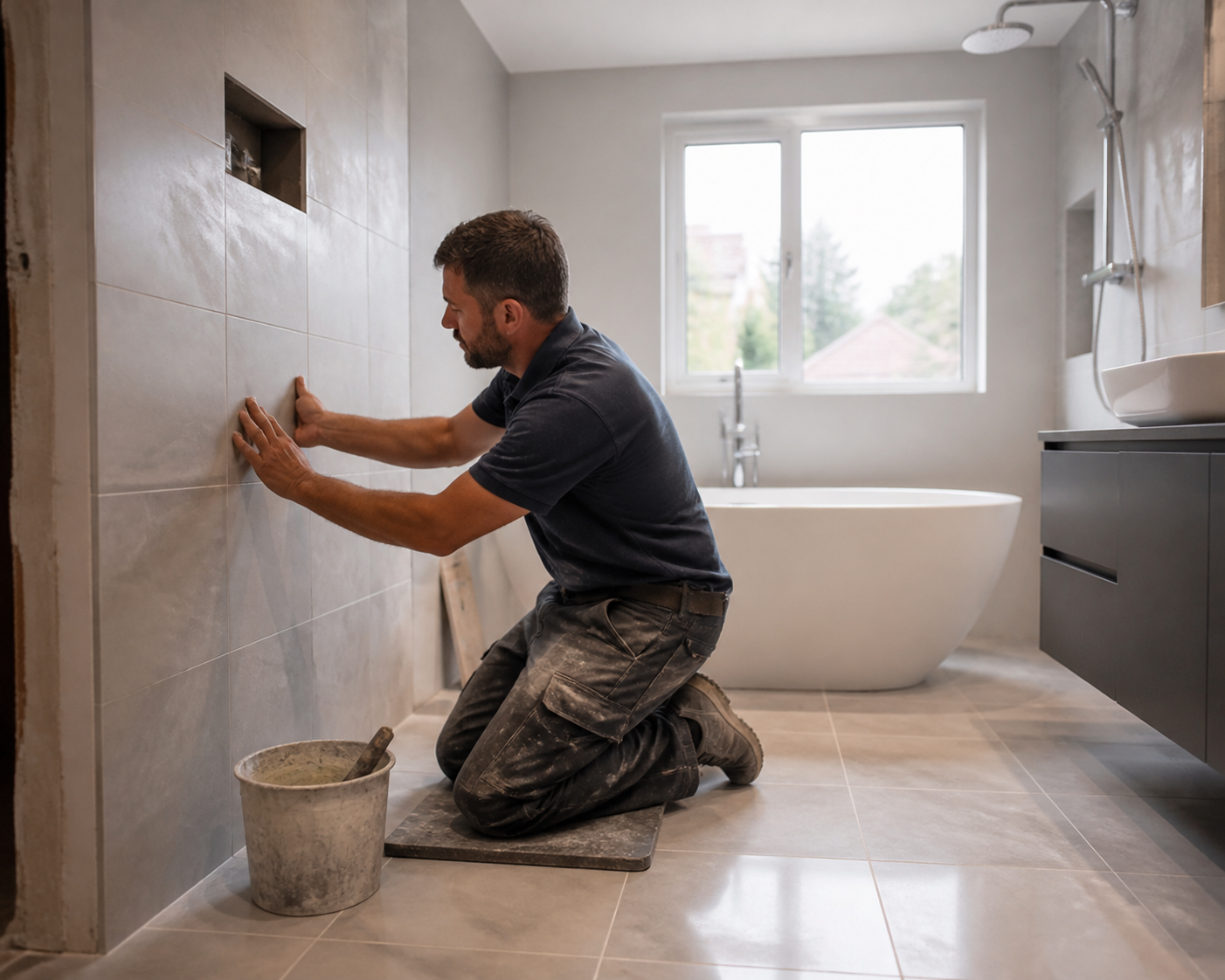
One of the biggest factors in a good result is what sits underneath the tiles. In kitchens, old finishes can hide uneven plaster, poor previous work or floor movement that needs attention before tiling begins.
On walls, the important questions are whether the surface is sound, reasonably even and suitable for tiling around sockets, corners and units. On floors, even small level changes can affect the finished look, especially with larger tiles.
This is one reason why professional advice before ordering materials can save time and money later. A tile might be right in style but wrong for the background if too much cutting, levelling or preparation will be required.
4. Think about tile size, shape and layout
Tile size changes the whole look of a kitchen, but it also changes how the job needs to be set out. Small tiles can add detail and character. Larger tiles can look clean and modern. Neither is automatically better.
What matters is how the tile works with the dimensions of the room and the fixed features in it, such as:
Worktops and upstands
Wall units and tall housings
Windows and reveals
Sockets, switches and extractor positions
Doorways and visible floor edges
A good layout aims to keep cuts balanced and avoid thin, awkward pieces where they will be most visible. That is especially important on splashbacks and along kitchen floors that run into adjoining spaces.
5. Choose a finish that suits cleaning and safety
Kitchens are practical rooms, so finish matters as much as appearance. Gloss wall tiles can reflect light well and wipe clean easily. Matt finishes can offer a softer look, but some textures hold onto marks more readily.
For floors, it is sensible to think about grip as well as style. A tile that looks great in a showroom may not be the most practical option in a room where spills happen. The right balance usually sits between easy maintenance, a finish you like and a surface that feels comfortable and secure in normal use.
6. Do not overlook grout, joints and edge details
Grout often gets left until late in the process, but it has a major effect on the final appearance. A closely matched grout can create a calmer, more seamless look. A contrasting grout can highlight the tile pattern and shape more strongly.
It is also worth planning edge trims, junctions and finishing points before work starts. In kitchens, neat detailing around worktops, corners and exposed tile edges can make the difference between a serviceable job and a premium finish.
7. Time the tiling properly within the wider kitchen project
Kitchen tiling usually sits alongside other work, such as fitting units, worktops, appliances or decorating. The order matters.
Wall tiling is often best planned once key kitchen elements are in place so the splashback and visible lines can be set neatly against the finished layout. Floor tiling also needs careful timing so transitions, plinth lines and appliance spaces are properly considered.
Getting that sequence right helps avoid unnecessary rework and gives a cleaner result overall.
Should you tile the splashback, the full wall or the whole floor?
If you are still deciding how far to go with the project, these are the usual options homeowners in York consider:
Splashback-only tiling
This works well if you want a practical surface around the sink and hob without changing the whole room. It can add colour or texture while keeping the project focused and cost-conscious.
Full wall tiling
This creates a stronger visual feature and can be a good choice where you want a cleaner-lined, more finished look across one or more key elevations.
Kitchen floor tiling
This is often the biggest visual and practical commitment. A tiled floor can suit busy households well, but it needs the right product and proper preparation to perform well over time.
Wall and floor tiling together
This gives the most complete transformation, but it also makes planning more important. Layout, tone, grout choice and sequencing all need to work together so the room feels cohesive rather than busy.
What to look for when comparing kitchen tilers in York
Not all quotations cover the same level of preparation or finishing detail. Before you book, it is worth asking what is included and how the work will be approached.
Preparation: Is the condition of the walls or floor being assessed properly?
Layout: Has thought been given to visible lines, cuts and finishing points?
Detailing: How will sockets, corners, trims and exposed edges be handled?
Clean working: Will the space be protected and left tidy?
Insurance and guarantee: Are you booking a business that stands behind its work?
The lowest quote is not always the best value if it overlooks preparation or results in a finish that needs redoing sooner than expected.
Why homeowners choose Paul J Russell Tiling & Decorating Services
We are a local York business providing high-quality tiling and decorating for domestic and commercial properties. Established in 1995, we are fully insured, all work is guaranteed and we are known for high standards and cleanliness.
Because we work across tiling and decorating, we look at the kitchen as a whole rather than just one isolated surface. That helps us advise on finish, layout and how the tiling will sit with the rest of the room.
If you are planning an update, you can find out more about our kitchen tiling and decorating services in York or arrange a free consultation and quotation.
For added reassurance, you can also view recent feedback on our Google profile and see examples of our work on our Facebook page. Customers regularly mention our workmanship, helpful advice and tidy approach.
Frequently asked questions about kitchen tiling York
Do I need wall tiles, floor tiles or both in a kitchen?
That depends on the room and what you want from it. Some kitchens only need a practical splashback. Others benefit most from a durable tiled floor. If you want both, it helps to plan the overall look so the finishes complement one another.
Can you tile over existing kitchen tiles?
Sometimes, but only if the existing surface is sound, stable and suitable for the new finish. In many kitchens, the best approach depends on the condition of the old tiles, the walls behind them and how much thickness can be accommodated around sockets and edges.
Are large tiles better for kitchen floors?
Not always. Large tiles can look sleek and modern, but they also need a suitably even floor and careful setting out. In some kitchens, a smaller or mid-sized tile gives a more practical and balanced result.
What grout colour is best for kitchen tiles?
The best grout colour depends on the tile, the look you want and how practical the area needs to be. Lighter grout can feel bright and clean, while darker tones can be easier to live with in busy areas. It is worth deciding this early because grout has a major impact on the final appearance.
How long does kitchen tiling take?
Timescales vary depending on the size of the area, the amount of preparation required, the complexity of the layout and drying times between stages. A straightforward splashback is very different from a full kitchen floor with levelling and detailed cuts, so it is best assessed on quotation.
Plan the tiling first for a better kitchen finish
Good kitchen tiling is not only about choosing attractive tiles. It is about choosing the right tiles for the room, preparing the background properly and setting everything out so the finish looks clean, balanced and built to last.
If you are considering kitchen tiling in York, Paul J Russell Tiling & Decorating Services can help you plan the job properly from the start. Arrange your free consultation and quotation for kitchen tiling in York and the surrounding areas.

Comments